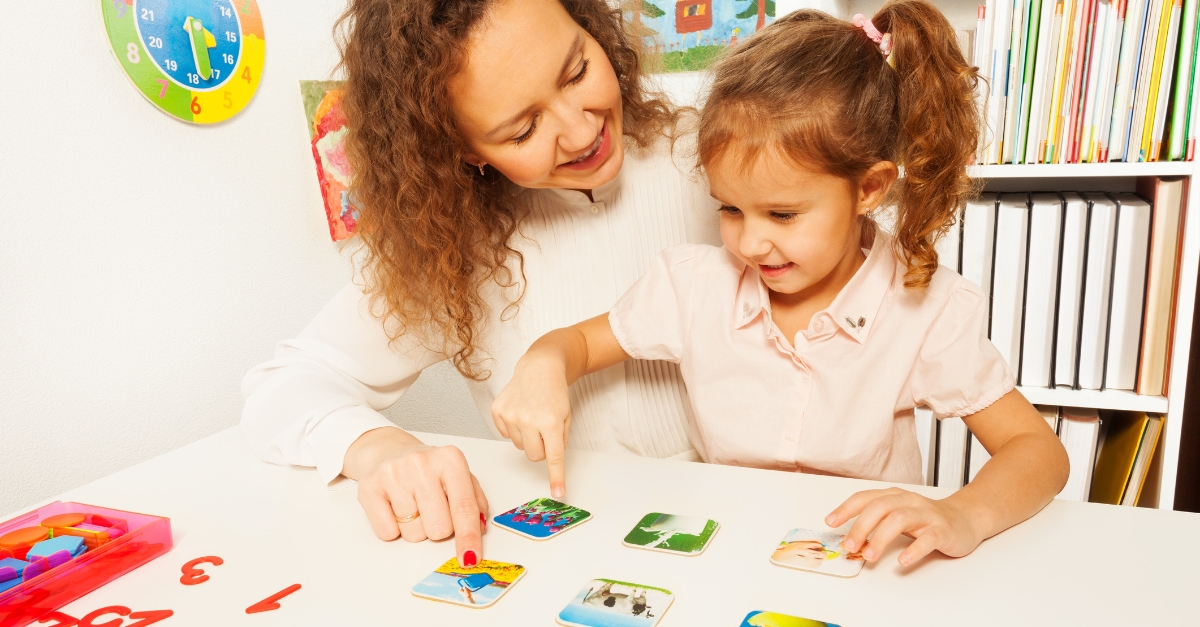
It's Monday morning in your preschool classroom. You pause for a moment and scan the room. One child is pointing to a picture card to ask for more snacks. Another child who is learning English is playing Lego with a friend, following along to their gestures and modelling. Another preschooler is using noise-cancelling headphones while playing at the sensory table.
Each child is engaged, learning, and participating in your classroom. This is an example of an inclusive classroom.
What is Inclusive Education?
Inclusive education is a system where all students, regardless of their abilities, language, or background, can learn together and access quality education. It means intentionally designing classroom environments, routines, and interactions so that every child can belong, engage, and learn.
By providing equal access to quality education and the necessary accommodations and tools to support diverse learning needs, inclusive schools embrace equity and mutual respect for every child in the classroom.
The Universal Design for Learning (UDL)
The Universal Design for Learning (UDL) is a framework that supports the learning needs of all students through intentional, proactive, and reflective instruction and interactions. This framework uses flexible curriculum and learning materials to reflect an accessible learning environment that supports ALL children, both those with and without disabilities, in becoming experts in their own learning.
The following triple Venn diagram shows the 3 main learning networks that make up the UDL framework:
|
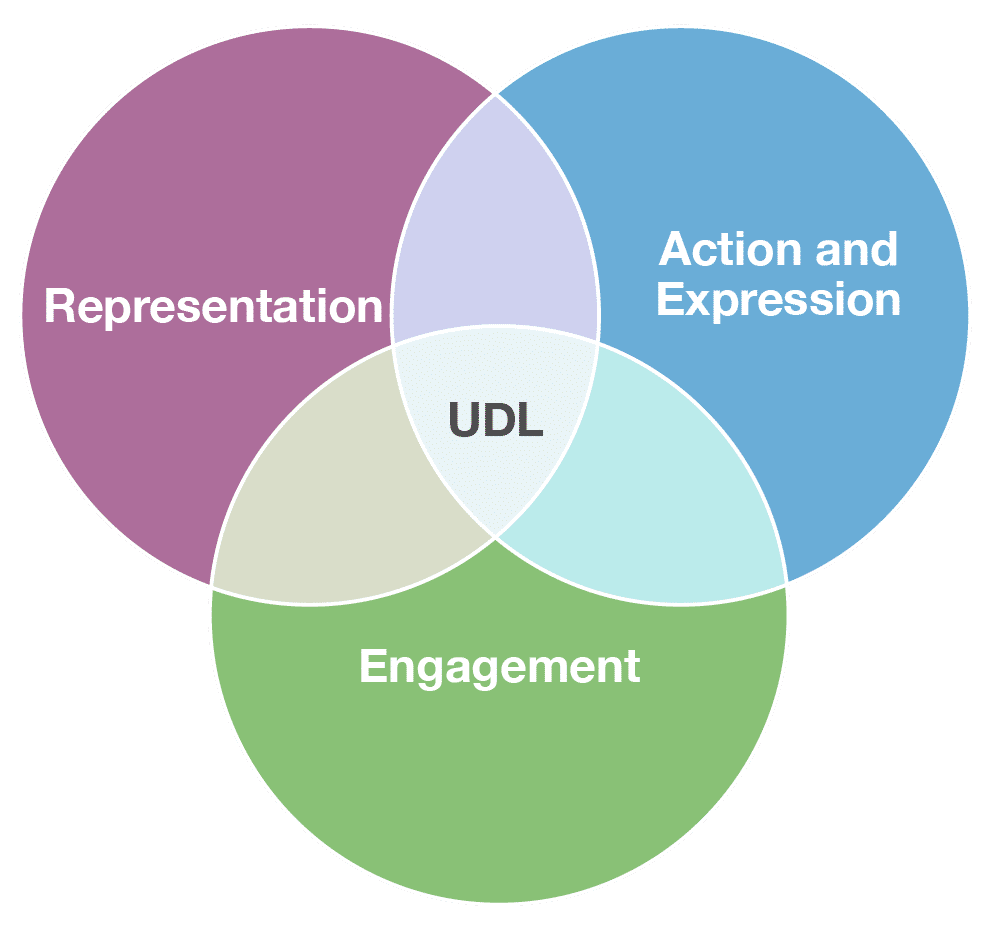
Caption: The three principles of UDL are shown in a triple Venn diagram, with UDL at its centre: Engagement, Representation, Action & Expression Source: https://campusmentalhealth.ca/toolkits/accessibility-and-accommodations/accessibility/principles-of-udl/
|
Multiple means of Engagement (the why of learning): the strategies used to ensure that young children are motivated to learn and remain engaged in the learning process
Multiple means of Representation (the what of learning): methods used to present curriculum content to young children
Multiple means of Action & Expression (the how of learning): ways in which children can show how they have understood the curriculum content
|
UDL guides the development of flexible learning environments that can accommodate different learning styles.
The goal of UDL is to increase flexibility in ways that information can be presented, and in the ways that children can respond and demonstrate their understanding or learning. At the same time, we want to decrease any barriers in instruction, while providing the necessary accommodations and supports needed for all children, including those that have disabilities, ELLs, or have other learning impairments.

Differentiated Instruction
Differentiated Instruction (DI) involves tailoring instruction to meet the individual needs of students within a classroom. The goal of differentiated instruction is to support all students in learning effectively regardless of ability. All students, regardless of their ability, should be challenged in their learning environment.
Carol Ann Tomlinson introduced the Differentiation Instruction theory, which contains four significant elements: content, process, product, and learning environment. These elements are linked and may be tailored based on the learner's readiness, interest, and learning profile.
- Content: What is being learned. Several elements and materials are used to support instructional content.
- Process: How children learn. Flexible grouping is consistently used and classroom management benefits students and teachers.
- Product: How children demonstrate learning. Children are active and responsible explorers. Initial and ongoing assessment of growth are essential, with opportunity for varying responses and means of expression.
- Learning Environments: The where and with whom learning happens. The environment serves as a third teacher for children to explore, grow, and take ownership of their own learning.
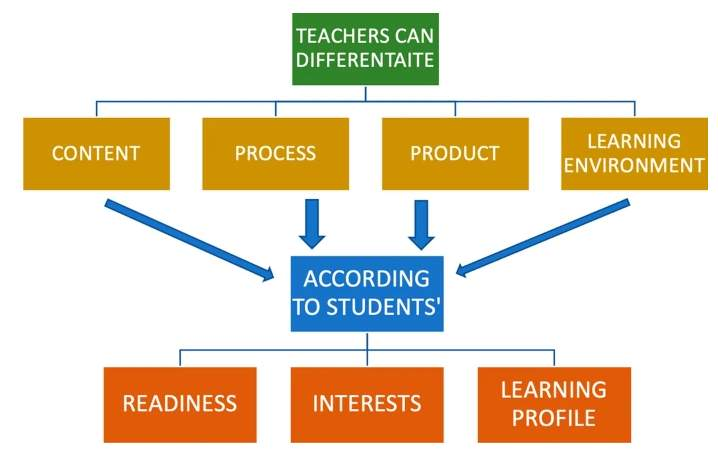
This diagram shows the four components of Differentiated Instruction: Content, Process, Product, Learning Environment, all linked according to students' readiness, interests and learning profile. Image retrieved from: Tomlinson, C. A., & Imbeau, M. B. (2010). Leading and managing a differentiated classroom. Association for Supervision and Curriculum Development
Understanding and supporting different learning styles
When you looked around your preschool classroom, you saw different students learning and interacting with their environment in a variety of ways. This included using picture cards to communicate, gestures and modelling, or using noise cancelling headphones to support sensory needs.
Children learn and grow in many different ways, especially in early childhood. Each child brings their unique strengths, needs, cultural background, and differences that shape how they experience and see the world around them. Some children may have disabilities, impairments, learning delays, or be neurodivergent, while others may need extra support in communication, sensory processing, physical movement, and/or social-emotional interactions.
As educators, it is our responsibility to understand and honour these differences to give every child an opportunity to thrive by creating a supportive and inclusive space to learn and grow.
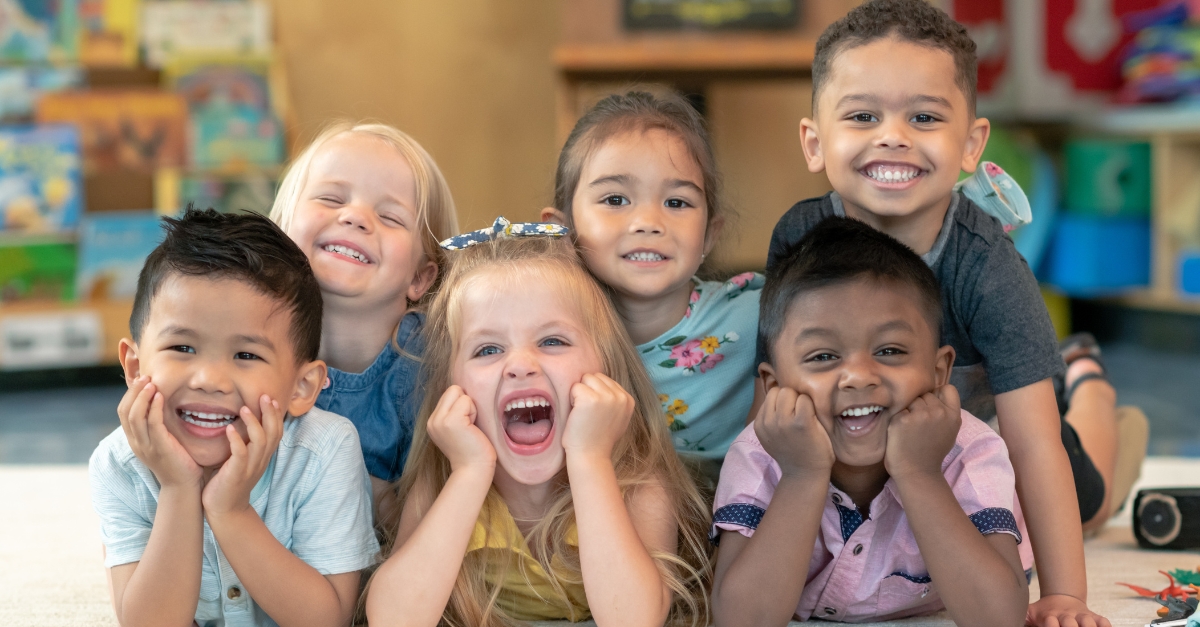
How can I support the diverse needs in my classroom?
The list below shares a variety of strategies and examples that you may consider using in your classroom to support your children's diverse learning needs. It is important to remember that not all these strategies may work. You know your learners best. Understanding your child's strengths, learning needs, and unique background, will be crucial to providing the best care and support for their education.
- Physical Mobility Needs
- Use mobility aids such as walking frames or wheelchairs if needed
- Arrange furniture in the classroom so that there are clear, wide paths
- Offer flexible seating, tables, or tools
- Allow extra time for transitions and routines
- Use a variety of gross and fine motor equipment in learning activities (e.g. different sized trikes with support for outdoor play)
- Provide modification of lessons and activities with simpler movements, scaffolding, or hand-over-hand modelling
- Communication Needs
- Embed visuals and pictures aids throughout daily routines, schedules, and activities
- Use gestures and model language
- Give simple, clear instructions
- Try augmentative and alternative communication tools (e.g. AAC devices such as PECS, letter boards on tablets, eye tracking devices)
- Allow for extra processing time
- Pair verbal instructions with visual cues or gestures
- Sensory Needs
- Create a small nook or area to allow children a quiet, calm space in the classroom
- Use partial light coverings to dim lights (follow appropriate safety regulations)
- Create a sensory bin with tools that children can use (e.g. fidget toys, sand, play doh, textured fabrics)
- Offer noise cancelling headphones for children that may benefit from a quieter environment
- Offer movement opportunities or tools such as bean bags, wiggle boards, trampolines
- Social-Emotional Needs
- Incorporate consistent routines to build a sense of safety and expectations for children
- Offer positive reinforcements and encouragement
- Model and teach emotional language to recognize feelings and how to cope with it
- Use "First, Then" model with visuals to support transitions and expectations
- Use a timer for transitions in routines and give 5-minute and/or 1-minute verbal warnings to support expectations
- Support and model positive peer interactions through guided play
- Cognitive Learning Needs
- Break instructions or tasks into smaller chunks
- Use a hands-on and play-based approach to learning experiences
- Offer repetition and lots of choice for children to express their thoughts
- Offer physical breaks for the child throughout a task (E.g. go for a walk, use the quiet corner)
- Use a guided approach to teaching that supports scaffolding of instructions (E.g. scribing, hand-over-hand)
Reflective practice helps educators refine their approach and continuously improve the quality of their teaching.
You might consider the following self-reflection questions as you think about inclusion and how to support children through diverse learning opportunities in your classroom.
Considering UDL and DI practices, how do you adapt routines, materials, and instruction to ensure equitable opportunity for your children?
- Whose identities are most visible in your classroom environment, and whose identities might be missing or underrepresented?
- How well do you understand the cultural backgrounds and experiences of the families in your classroom?
- Do children see themselves being reflected in the materials and displays around your room?
Conclusion: Equitable Access and Inclusive Classrooms
When UDL and DI frameworks are used together, they help educators create classrooms where every child feels included and supported. By planning flexibly and responding thoughtfully, we set children up for success.
Further Learning with Lillio Academy
For educators seeking to further their understanding of inclusive education practices, Lillio Academy offers the course "Inclusive Education Practices: UDL and DI in the Classroom". This course explores evidence-based strategies and theoretical frameworks, such as UDL and DI, to create inclusive learning environments that support all learners, including students with disabilities, English language learners, and those with diverse learning profiles.
Whether you're new to this method or looking to refine your skills, this course is an excellent resource for professional growth!